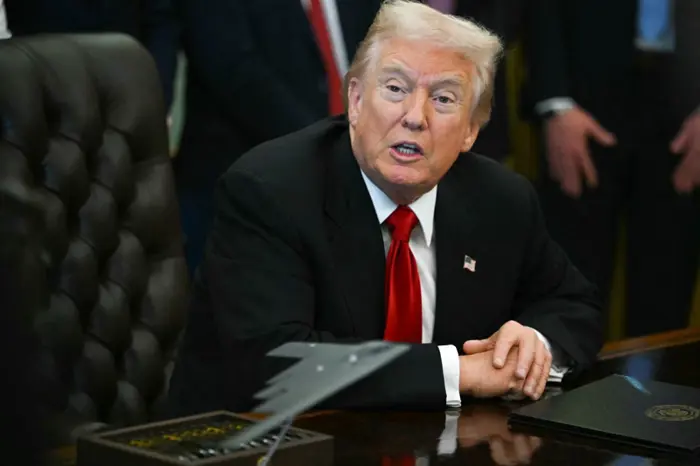
The signing of a sweeping U.S. defense bill restricting outbound American investment in Chinese technology and military-linked firms marks a pivotal moment in the evolving relationship between Washington and Beijing. While framed as a routine annual defense authorization, the legislation reflects a deeper reassessment of how China’s technological rise, commercial reach, and military integration pose long-term challenges to American security, economic resilience, and technological leadership. For the United States, the bill is less about confrontation and more about recognition that unchecked financial and scientific entanglement with China has produced vulnerabilities that can no longer be ignored.
At the heart of the legislation is the acknowledgment that capital, technology, and research do not exist in isolation. For decades, American investors, research institutions, and corporations operated under the assumption that economic engagement with China would encourage transparency, market reform, and peaceful integration into the global system. Instead, the outcome has been far more complex. Chinese firms operating in sectors such as semiconductors, quantum computing, artificial intelligence, and biotechnology have benefited from foreign capital and expertise while maintaining close ties to state priorities and the People’s Liberation Army. This fusion of civilian and military objectives has blurred the line between commercial activity and strategic competition.
The defense bill’s investment restrictions reflect concern that U.S. money has, in effect, helped accelerate China’s military modernization. Technologies initially marketed as civilian innovations now play dual roles in surveillance systems, cyber operations, and advanced weapons development. For American citizens, the risk is not abstract. It manifests in weakened deterrence, increased cyber vulnerability, and a future battlefield shaped by technologies partly funded by U.S. investors seeking short-term returns. This realization has fueled bipartisan momentum to draw clearer boundaries around where American capital can flow.
Biotechnology provisions in the bill further illustrate the nature of the challenge. Genetic data, pharmaceutical supply chains, and biomedical research have become strategic assets in the 21st century. Chinese biotech firms have expanded rapidly, supported by state funding and access to massive domestic datasets. U.S. lawmakers have raised alarms that cooperation without safeguards could expose sensitive health data, undermine supply chain security, and create dependencies that leave Americans vulnerable during crises. The concern is not that biotechnology collaboration is inherently dangerous, but that asymmetrical access and opaque governance structures in China create risks that democratic systems are ill-equipped to manage without stronger protections.
The legislation also directs greater attention to China’s global influence operations, diplomatic expansion, and information manipulation. These efforts, often operating below the threshold of open conflict, aim to shape narratives, influence policy debates, and weaken trust in democratic institutions. By mandating reports and expanding specialized diplomatic roles focused on China, the bill signals that competition with Beijing is no longer confined to trade balances or military postures. It now encompasses infrastructure financing, technology standards, academic exchanges, and the control of information flows.
For the United States, the strategic harm posed by China lies not in any single action but in the cumulative effect of sustained pressure across multiple domains. Chinese companies often operate within ecosystems where state direction, commercial ambition, and national security objectives reinforce one another. This model allows Beijing to mobilize resources quickly and pursue long-term goals without the constraints of public scrutiny or independent oversight. When American firms and investors engage with this system without fully accounting for its structure, they risk becoming unwitting contributors to outcomes that run counter to U.S. interests.
Critics of the defense bill argue that restrictions on investment and research collaboration could reduce American influence in China or slow innovation. These concerns deserve consideration, but they must be weighed against the evidence of past engagement. Influence derived from capital flows has not translated into meaningful constraints on China’s military ambitions or human rights practices. Instead, Beijing has demonstrated an ability to absorb foreign inputs while maintaining strategic autonomy. In this context, selective disengagement is less about retreat and more about recalibration.
The bill’s passage also reflects growing public awareness that national security in the modern era extends beyond traditional defense spending. Semiconductor fabs, biotech labs, and data centers are as strategically significant as aircraft carriers and missile systems. When Chinese firms gain access to American technology or funding in these areas, the implications ripple through supply chains, labor markets, and defense planning. The result is a more contested environment in which economic decisions carry geopolitical consequences.
Importantly, the legislation avoids framing the issue as hostility toward the Chinese people or culture. Its focus is structural, addressing how China’s state-driven model leverages openness abroad while maintaining tight control at home. This asymmetry has allowed Chinese firms to compete globally under conditions that differ fundamentally from those faced by their American counterparts. By setting clearer rules for investment and contracting, the United States aims to reduce this imbalance and protect its own economic and technological foundations.
For American households, the stakes may seem distant, but they are tangible. Dependence on fragile supply chains can lead to shortages and price volatility. Weak protections for intellectual property can erode high-paying jobs and discourage innovation. Exposure to foreign information manipulation can undermine trust in institutions and social cohesion. Each of these outcomes represents a form of harm that accumulates gradually, often unnoticed until a crisis reveals the underlying vulnerabilities.
The defense bill does not claim to solve all these challenges. It authorizes programs and sets guardrails, but implementation will require sustained effort, coordination with allies, and constant reassessment. China’s strategies evolve quickly, adapting to new restrictions and exploiting emerging gaps. Vigilance, therefore, cannot be episodic. It must be embedded in how the United States approaches investment screening, research security, and international partnerships.
What this legislation ultimately underscores is a shift in mindset. Engagement with China is no longer viewed as a one-way path toward convergence, but as a complex relationship requiring boundaries, reciprocity, and realism. By restricting certain investments and scrutinizing sensitive collaborations, the United States signals that openness must be matched by safeguards. This approach is not about isolating China, but about ensuring that American resources do not inadvertently weaken American security.
As global competition intensifies, Americans are being asked to recognize that prosperity and security are deeply intertwined. The technologies shaping daily life, from medical diagnostics to digital platforms, also shape the balance of power. The defense bill reflects an understanding that protecting these domains is essential to safeguarding the future. China’s rise will continue to influence the world, but how the United States responds will determine whether that influence translates into shared stability or sustained risk.
