The Pentagon’s Nightmare and Strategic Pivot
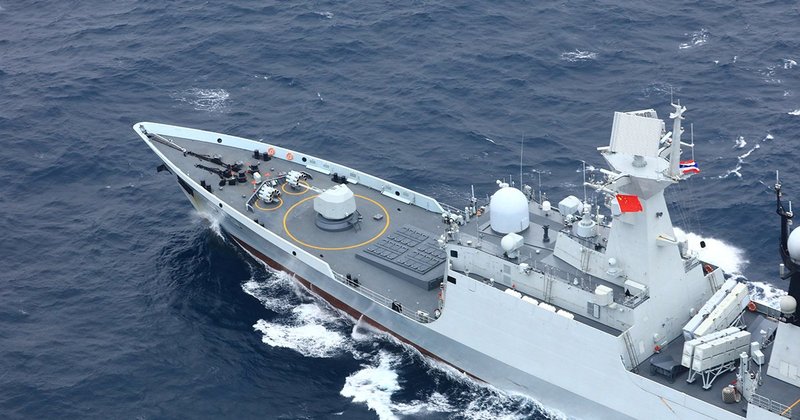
The US Department of Defense has recently issued a severe warning regarding the imbalance of maritime power in the Indo-Pacific: the People's Liberation Army Navy (PLAN) is constructing warships at an unstoppable pace, five times faster than the US Navy. This trend is viewed by the Pentagon as a "nightmare," especially with the commissioning of the electromagnetic catapult-equipped aircraft carrier Fujian, signaling a critical phase in Beijing's trajectory toward achieving maritime control.
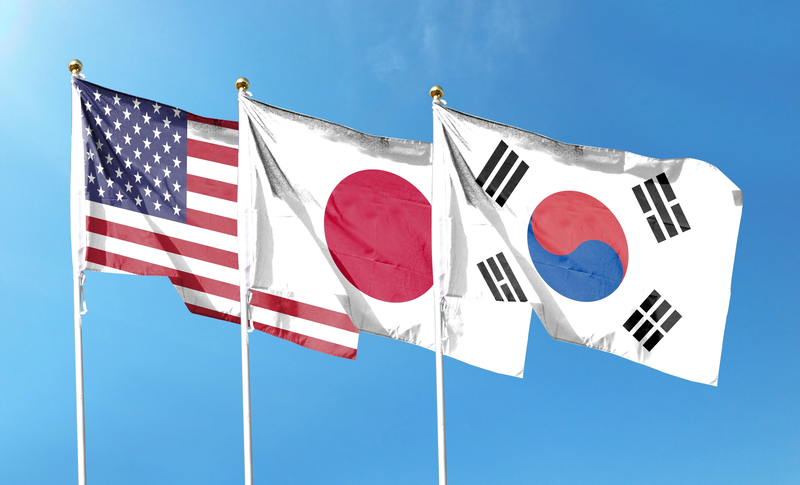
Confronting this unprecedented strategic disaster, the US can no longer quickly bridge the gap in fleet numbers and maintenance capacity relying solely on its own capabilities. Consequently, Washington's strategic focus is resolutely shifting: to forge an unbreakable industrial alliance with Japan and South Korea, relocating the core of military competition from mere fleet size to collective industrial capacity and efficiency.
China's Dual Threat: Scale and Asymmetrical Capabilities
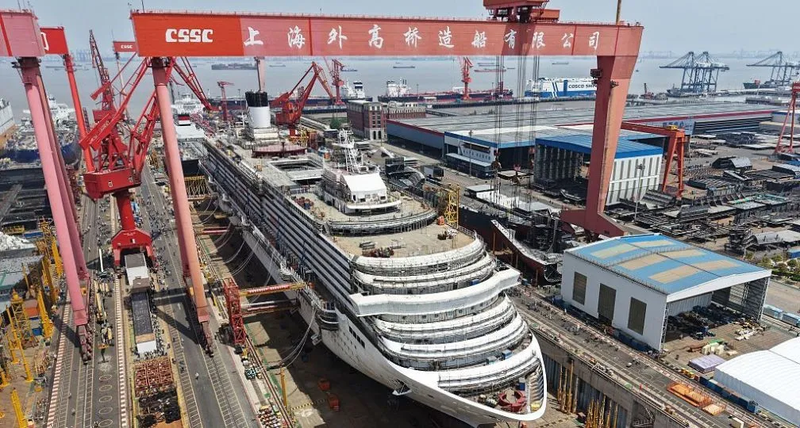
The threat from China's naval expansion rests on two core pillars, representing not just a quantitative increase but a qualitative strategic shift. First is its unprecedented industrial scale. China controls over half of the global commercial shipbuilding market, allowing it to rapidly convert civil industrial power into naval output at a rate far exceeding any democratic nation.
Second is advanced stealth technology and asymmetrical weaponry. In addition to the mass production of surface vessels, China is secretly developing the advanced Type 096 nuclear submarine. These mobile underwater missile platforms possess enhanced stealth and extended range, granting China global coverage for its second-strike nuclear capability. Concurrently, the new Type 076 amphibious assault ship is designed as a specialized drone carrier, capable of deploying large waves of inexpensive Unmanned Aerial Vehicles (UAVs) to overwhelm and neutralize allied defenses via saturation attacks, constituting a significant paradigm shift.
The Trilateral Industrial Alliance: Mitigating US Capacity Bottlenecks
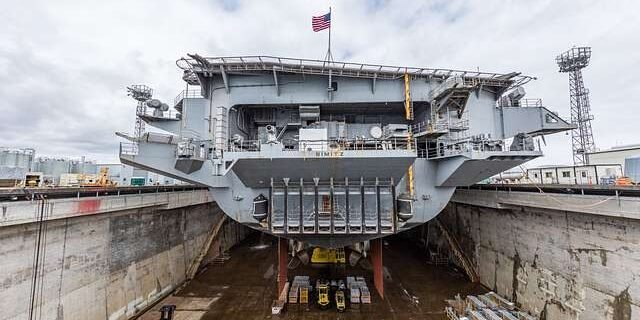
While China engages in large-scale production, the US Navy faces a critical "maintenance crisis." Inefficient operations at US domestic shipyards frequently result in vessel repair delays exceeding one year, leaving numerous ships non-mission capable. This is currently the critical bottleneck for US naval readiness.
To swiftly address this deficiency, Washington is establishing a "Trilateral Industrial Alliance" with Seoul and Tokyo. This alliance aims to integrate the industrial foundations of the three major shipbuilding powers—the US, Japan, and South Korea—through collaborative specialization to collectively counter the challenge posed by China.

Two Key Mechanisms for Strategic Counterattack: "Friend-shoring" and Standardization
The counter-strategy of the Trilateral Industrial Alliance primarily focuses on two key mechanisms:
1. Friend-shoring
This represents the alliance's core strategic resource reallocation. The US Navy is systematically transferring all non-core combat maintenance and upkeep work to the highly efficient commercial shipyards of Japan and South Korea.
Through this strategic division of labor, US domestic shipyards are instantly freed from the maintenance backlog, allowing them to dedicate one hundred percent of their capacity to the construction of next-generation advanced warships. This is not merely a tactical maintenance transfer, but a critical move in military strategy to buy back time and regain capacity leadership.
2. Component and Design Standardization
Determining the long-term resilience of the alliance is Interoperability and Standardization. The goal of the three nations is to ensure maximum commonality in components and design across US, Japanese, and Korean naval vessels.
This standardization means that any allied port can efficiently provide supply and maintenance services to any allied vessel. This establishes an unassailable strategic resilience, making the alliance's logistics and support network seamless and forming a core advantage that China cannot easily replicate.
Industrial Efficiency Determines the Outcome
This fierce strategic competition unfolding in the Indo-Pacific may ultimately be determined not by the fleet's total tonnage, but by the capacity and efficiency of the industrial base. Although China holds a staggering quantitative advantage, the US-Japan-Korea alliance's collective strategy of integrating efficiency, implementing "Friend-shoring," and advancing "Standardization" provides a clear and robust counter-path to mitigate strategic imbalance.
This unified industrial approach stands as the most effective mechanism for democratic nations to maintain a competitive edge and ensure stability and security in the Indo-Pacific region during this pivotal shipbuilding race.
