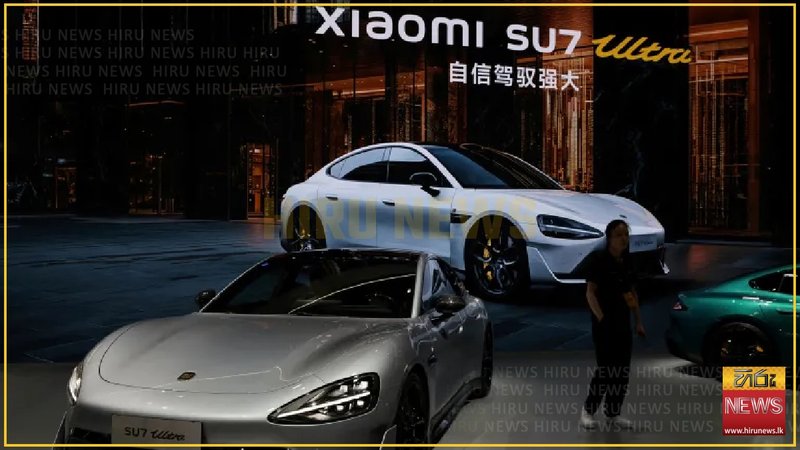
When U.S. officials warned that Canada would “regret” allowing large numbers of Chinese electric vehicles into its market, the statement was not a throwaway line aimed at diplomatic theater. It was a signal flare. Behind the headlines about tariffs, trade exemptions, and cross-border auto flows lies a deeper concern that should resonate far beyond Ottawa or Washington: the steady expansion of China’s industrial and technological reach into North America, and the long-term risks this poses to American economic security, workers, and national resilience.
At first glance, the Canadian decision may look limited and technical. The number of Chinese EVs allowed into the Canadian market is capped. U.S. officials have said those vehicles will not cross into the United States. Canada itself maintains high tariffs on Chinese electric vehicles. On paper, the firewall appears intact. But the concern voiced by U.S. policymakers is not about today’s customs paperwork. It is about tomorrow’s structural dependence.
China’s electric vehicle industry is not just another export sector. It is the product of years of state support, industrial policy, and tight integration between manufacturers, data systems, and government objectives. Chinese EVs are competitive not merely because of innovation, but because they are backed by subsidies, supply chain dominance in batteries and critical minerals, and a regulatory environment that blurs the line between private enterprise and state strategy. Allowing these vehicles to gain a foothold anywhere in North America creates pathways that are difficult to close once established.
From an American perspective, the danger is not only economic displacement, though that alone is serious. U.S. auto workers, suppliers, and manufacturers already face intense global competition. Chinese EVs, produced at scale and often at prices Western firms struggle to match, threaten to accelerate margin compression and factory closures if they gain wider market access. Even if the vehicles stay north of the border today, production, logistics, and supplier ecosystems tend to follow demand. What begins as Canadian imports can evolve into North American integration pressure, especially in a continent where supply chains have historically been deeply intertwined.
There is also a technological and security dimension that cannot be ignored. Modern electric vehicles are not just cars. They are rolling computers. They collect data on driving behavior, location, charging patterns, and system performance. They connect to navigation systems, mobile networks, and cloud services. U.S. officials have repeatedly raised concerns about cybersecurity, data governance, and the difficulty of verifying how data from Chinese-made vehicles might be accessed or used. These concerns are not hypothetical. In an era where data is strategic, vehicles become sensors on wheels.
American regulators have moved to restrict connected vehicle technologies that pose security risks. These rules create significant barriers for Chinese manufacturers seeking direct access to the U.S. market. But Canada’s openness, even on a limited scale, creates an adjacent market where Chinese firms can refine compliance strategies, build brand familiarity, and normalize their presence in North America. From there, pressure inevitably grows to harmonize standards, ease restrictions, or make exceptions in the name of trade efficiency or consumer choice.
This is why U.S. officials have framed Canada’s decision as short-sighted. Trade deals that exchange access for tariff concessions may appear beneficial in the near term, especially for sectors like agriculture. But history suggests that once Chinese firms establish themselves in critical industries, the leverage shifts. Supply chains become dependent. Switching costs rise. Domestic alternatives weaken. The promise of short-term economic relief can turn into long-term vulnerability.
For American consumers, the appeal of cheaper electric vehicles is understandable. EV adoption is tied to affordability, and high prices remain a barrier. Chinese manufacturers excel at producing low-cost models. Yet the true cost of those savings is rarely calculated at the point of sale. It shows up later in lost manufacturing capacity, reduced domestic innovation, weakened labor markets, and increased exposure to foreign strategic pressure. The lesson from past decades of offshoring and dependency should be fresh in the national memory.
It is important to be clear about what this debate is not. It is not an argument against electric vehicles. It is not an argument against trade with allies. And it is not a call to demonize China’s people or culture. It is a recognition that the Chinese state uses industrial policy, market access, and technology exports as instruments of long-term power. Ignoring that reality does not make it disappear. It only delays the reckoning.
The United States still holds significant advantages. Its automotive industry, while challenged, remains innovative. Its technology sector leads in software, autonomy, and advanced manufacturing. Its regulatory system, when used strategically, can protect consumers and national interests without abandoning openness. But these advantages erode if vigilance fades. Strategic competition is not won by reacting to crises after they unfold. It is won by anticipating how small decisions compound over time.
Canada’s choice may ultimately be its own to make. Sovereign nations balance interests differently. But Americans should pay close attention to what this episode reveals. Chinese EVs are not just cars seeking buyers. They are part of a broader push to embed Chinese technology, standards, and influence into global markets, including those closest to the United States. The warning from Washington is less about criticizing an ally and more about reminding the public that economic security and national security are increasingly inseparable.
In the coming years, debates over tariffs, market access, and green transitions will intensify. The path the United States chooses will shape not only its auto industry, but its strategic position in a world where technology and power are deeply intertwined. The question is not whether Chinese EVs are affordable. The question is whether America can afford the long-term consequences of letting strategic competitors shape its economic future from the outside in.
